4s eSIM Review: The Easiest Travel eSIM I’ve Used So Far
I use affiliate links on this page to share my recommendations with you, which means when you click, I get a small percentage of the purchase at no extra cost to you. This allows us to keep this page running. You can read more about how we handle your data in our privacy policy and affiliate disclosure here.
I’ve used a handful of travel eSIMs over the past few years. We used Airalo during a two-week road trip through Morocco, Holafly while traveling around Turkey, and most recently I tested 4s eSIM during a five-day trip to Cabo San Lucas, Mexico.
At this point, I’ve realized most travel eSIMs do the same basic thing. They give you data abroad so you can use Google Maps, book Ubers, check restaurant reviews, and upload too many vacation photos.
What usually separates one provider from another isn’t coverage or speed. It’s how easy it is to get connected in the first place.
And that’s where 4s eSIM genuinely impressed me.
I’ve never had an eSIM install this easily. I purchased the plan, tapped through a few prompts on my iPhone, and the eSIM pretty much set itself up. When our flight landed in Mexico, my phone automatically connected without me having to dig through settings, scan QR codes, or troubleshoot anything.
It was one of those travel purchases that just worked exactly the way it was supposed to.
👉 Check the latest 4s eSIM plans here
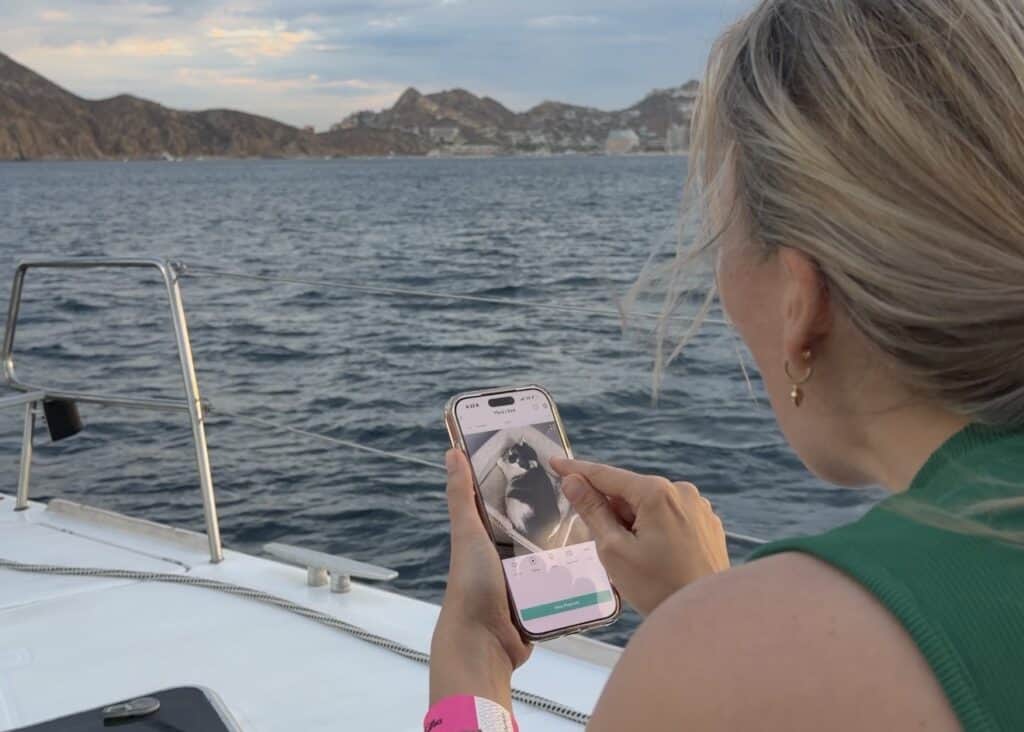
My Experience Using 4s eSIM in Cabo San Lucas
Tim and I used 4s eSIM during a five-day trip to Cabo San Lucas.
Before the trip, I installed the eSIM on my iPhone in just a few taps. Honestly, the installation process was what stood out most. With other eSIMs I’ve used, there’s usually at least a little bit of fiddling around in your phone settings to make sure everything is configured correctly.
With 4s eSIM, I barely had to think about it.
Once we landed in Mexico, it activated automatically and connected almost immediately. There was no moment of standing in the airport wondering whether I had done something wrong or if I needed to restart my phone.
As someone who travels internationally several times a year, I appreciated how seamless the whole process felt.
How Well Did It Work?
Once connected, I used it for pretty much everything I normally use my phone for while traveling:
- Google Maps navigation
- Looking up restaurants and coffee shops
- Messaging friends and family
- Checking hotel reservations
- Booking rides
- Uploading photos and videos to Instagram
- Managing flights and travel logistics
I had reliable service throughout Cabo and the surrounding tourist areas we visited.
The experience was very similar to what I’ve had with Airalo in Morocco and Holafly in Turkey. In cities and popular tourist destinations, all three performed well.
That said, I’ve learned not to expect any eSIM to magically solve connectivity issues in remote areas. Whether I was hiking in Morocco, exploring more rural parts of Turkey, or traveling elsewhere, service can always get spotty once you leave populated areas.
If you’re planning hikes or backcountry adventures, I still recommend downloading offline maps in AllTrails before heading out. That’s something I do regardless of which eSIM I’m using.
Unlimited Data Without the Stress
One feature I liked was the availability of unlimited data plans.
When I travel, I use way more data than I do at home. Between navigation, social media, restaurant searches, flight changes, and uploading photos, it adds up quickly.
I don’t love spending a trip wondering how much data I have left or whether I need to stop uploading videos to save bandwidth. Having an unlimited plan removes that mental load and lets me use my phone normally.
How It Compares to Airalo and Holafly
Since I’ve now used Airalo in Morocco, Holafly in Turkey, and 4s eSIM in Mexico, I think I have a pretty good basis for comparison.
Coverage and overall performance were similar across all three.
The biggest difference was the setup experience.
Airalo and Holafly both worked well once everything was running, but 4s eSIM was noticeably easier to install and activate. It required less effort on my end and felt more beginner-friendly.
If you’ve never used an eSIM before, that’s probably the biggest reason I’d recommend 4s eSIM over some of the alternatives.
Is 4s eSIM Worth It?
I think so.
Most travel eSIM companies are offering access to the same cellular networks, so you’re often comparing pricing, plan options, and ease of use more than anything else.
For me, 4s eSIM stood out because it removed the friction.
I bought the plan, installed it in a few taps, landed in Mexico, and immediately had data. That’s exactly what I want from a travel eSIM.
It’s a great option for:
- First-time eSIM users
- International travelers who want a simple setup process
- People who rely heavily on Google Maps while traveling
- Digital nomads working from cities and tourist destinations
- Travelers looking to avoid expensive roaming fees
Final Thoughts
After testing Airalo in Morocco, Holafly in Turkey, and 4s eSIM in Mexico, 4s eSIM has been the easiest one I’ve used from a setup perspective.
The coverage was reliable, the pricing was reasonable, and the installation process was incredibly straightforward. I spent less time messing with my phone and more time enjoying my trip, which is exactly the point.
If you’re looking for an affordable travel eSIM that’s easy to set up and works right out of the gate, I’d absolutely consider 4s eSIM for your next international trip.
👉 Grab a 4s eSIM before your trip and skip the roaming fees.