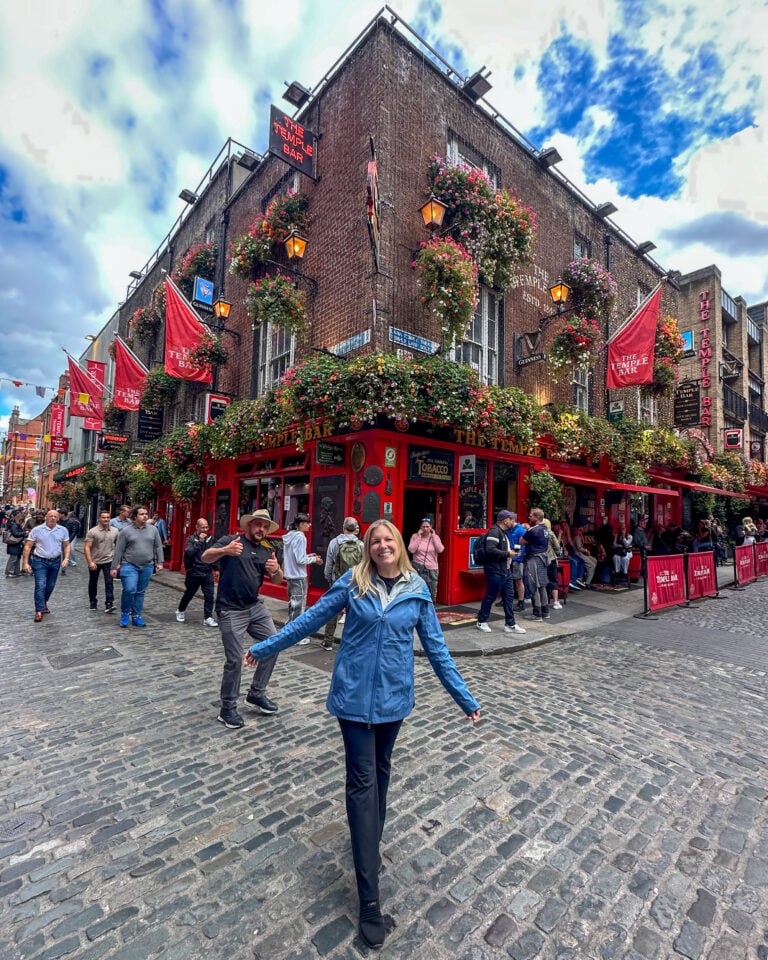
Is the Book of Kells Experience in Dublin REALLY Worth It?
I use affiliate links on this page to share my recommendations with you, which means when you click, I get a small percentage of the purchase at no extra cost to you. This allows us to keep this page running. You can read more about how we handle your data in our privacy policy and affiliate disclosure here.
Last Updated on December 4, 2025 by Sarah Puckett
If you’re planning a trip to Dublin, chances are the Book of Kells is already on your list — but is it really worth it? This 1,200-year-old illuminated manuscript is one of Ireland’s most treasured national artifacts. For me, seeing it inside Trinity College’s Old Library is an experience that lingers long after you leave.
When Tim and I visited in late August 2025, even with timed entry tickets, the library was buzzing with people eager to see it for themselves.
In this guide, I’ll walk you through exactly how to visit the Book of Kells, what your ticket includes, how to avoid crowds, and whether it’s truly worth your time (and the ticket price). You’ll also find tips from my own visit, plus practical details like the free audioguide and nearby attractions.
Whether you’re an art lover, history buff, or simply curious traveler, this post will help you plan your visit with confidence, and make the most of one of Dublin’s most unforgettable cultural experiences.
What Is the Book of Kells Experience?
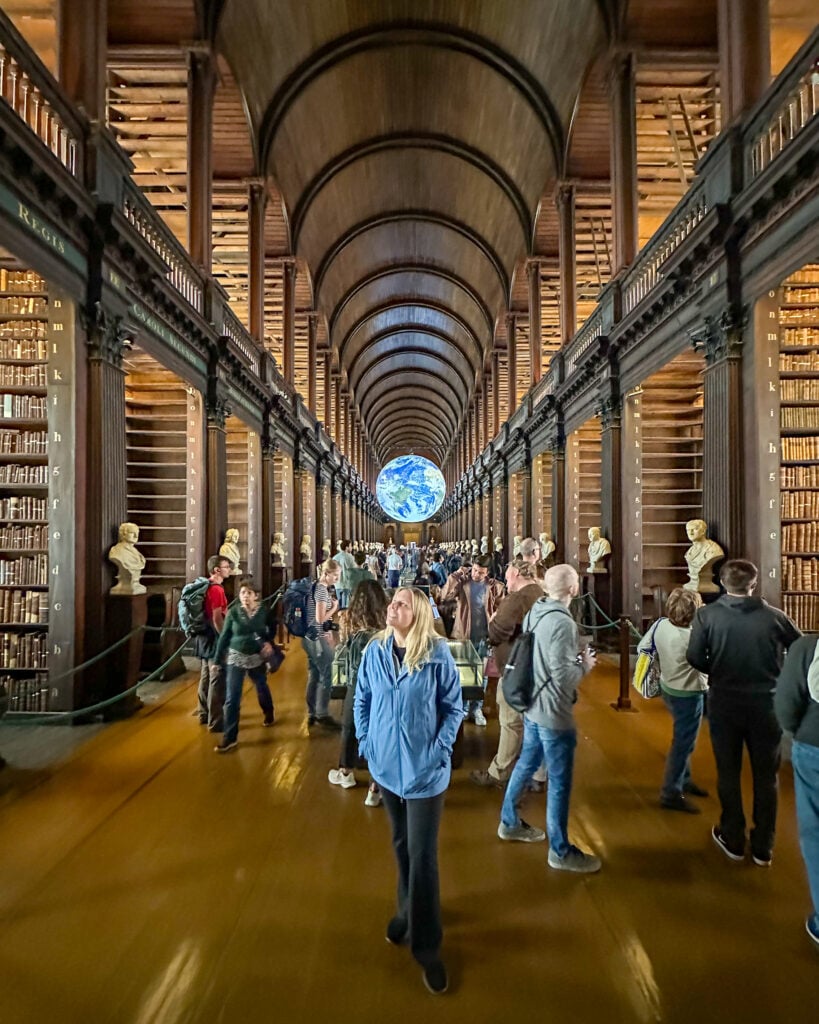
The Book of Kells Experience at Trinity College Dublin is a self-guided tour through the Old Library that brings Ireland’s most famous manuscript to life. It starts with an interactive exhibit about how monks created the book over 1,200 years ago, followed by a viewing of two illuminated pages. The visit ends in the stunning Long Room — a grand, two-story library lined with ancient books and one of the most beautiful spaces in Dublin.
What Is the Book of Kells?
The Book of Kells is a 9th-century illuminated manuscript — a handwritten copy of the four Gospels of the New Testament (Matthew, Mark, Luke, and John) in Latin. It’s considered one of Ireland’s greatest national treasures and one of the most extraordinary examples of medieval art in the world.
Each page of the manuscript is made from fine calfskin vellum and decorated with incredibly intricate designs — swirling Celtic knots, interlaced animals, angels, and symbols drawn in vivid pigments made from crushed minerals and plants. The level of detail is astonishing; even with modern magnification, scholars continue to find hidden imagery and meaning woven into the art.
The History Behind the Book of Kells
The Book of Kells was created by monks around 800 AD, during what’s known as Ireland’s Golden Age of monastic scholarship. The monks responsible were part of the Columban order — followers of St. Columba, who founded a monastery on the Scottish island of Iona in the 6th century.
When Viking raids began threatening Iona, the monks fled to a sister monastery in Kells, County Meath, Ireland. Most historians believe the manuscript was begun on Iona and later brought to Kells for safekeeping — hence its name.
Although it was never meant to be a “working” Bible for everyday use, the Book of Kells likely served a ceremonial purpose: displayed on the altar during Mass to represent the Word of God in the most beautiful form possible.
Over the centuries, the manuscript has survived wars, invasions, and even theft. In 1007, it was stolen from the church at Kells, stripped of its ornate gold cover, and later recovered — thankfully intact. It eventually found its permanent home at Trinity College Dublin in 1661, where it remains today, preserved under glass in a climate-controlled case.
Why the Book of Kells Is So Important
The Book of Kells isn’t just a religious artifact — it’s a masterpiece of art, history, and identity. It captures the blending of early Christian faith with ancient Celtic artistry, creating something uniquely Irish. Its pages are filled with both beauty and symbolism: spirals representing eternity, animals symbolizing the four Evangelists, and geometry that scholars are still decoding centuries later.
In many ways, the Book of Kells represents the birth of Ireland’s literary and artistic heritage — the very foundation of its global reputation for storytelling and creativity. It’s a physical embodiment of Ireland’s devotion to both faith and imagination, preserved for over a millennium.
How to Visit the Book of Kells
The Book of Kells Experience is located inside Trinity College Dublin’s Old Library, right in the city center near Grafton Street. You’ll enter through the main college gates on College Green and follow signs to the library building. It’s easy to reach on foot from most Dublin hotels or attractions — less than 10 minutes from Temple Bar or St. Stephen’s Green.
Book of Kells Tickets & Prices (2025):
- Adults: €25
- Students/Seniors: €20
- Children 13-17: €19
- Children 6-12: €13.50
- Children under 5: Free
- Book online through Trinity College’s official website — tickets often sell out, especially on weekends and in summer.
Your ticket includes entry to four parts of the experience:
- The Introductory Exhibit — A modern, interactive museum-style display that explains the history, artistry, and symbolism of the manuscript.
- The Book of Kells Gallery — View two open pages of the original 9th-century manuscript, displayed under glass.
- The Long Room — A breathtaking, two-story library filled with 200,000 antique books and marble busts of writers and philosophers.
- The Red Pavilion — Three immersive audio-visual experiences on the library’s works , the history of the Book of Kells, and, as of 2025, the redevelopment project.
Tip: There’s a free audioguide you can listen to directly from your phone. Use this link or scan the QR code at the entrance and bring your own earbuds for the best experience.
What to Expect During the Book of Kells Experience
To help you get decide if the Book of Kells Experience would be worth it to you, here’s our experience.
The Audioguide
After we showed our tickets, Tim and I began the audioguide and entered the museum portion of the experience. The audioguide corresponds to numbers on the walls and placards of the museum, so it’s easy to follow along. Most of the information in the audioguide is mirrored by text in the exhibits. However, I find it easier to learn and absorb information in museums with a combition of visual and auditory explanations!
The Museum
As we moved through the exhibit, we first learned about the early ways of writing on Ogham Stones, using simple marks on rock to communicate. At first this seemed out of place with the Book of Kells. What do ancient rocks have to do with a fancy old book?
I think I can explain. By setting some of our most primitive writing alongside some of our most detailed and intricate, the exhibit creates a powerful juxtaposition that highlights how much written language has evolved.

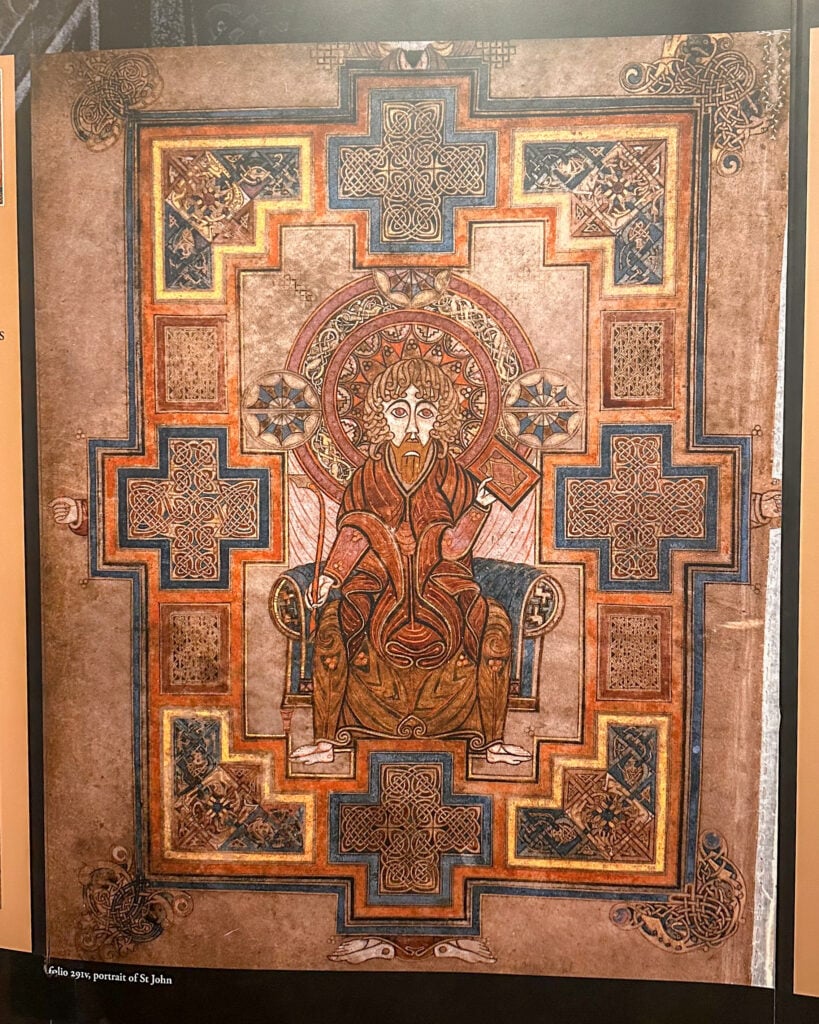
The next part of the exhibit makes this clear, showcasing an enlargement of one of the pages of the Book of Kells, the iconic and colorful Four Evangelists, each representing one of the figures of the New Testament of the Bible.

With this foundational information in mind, we proceeded through the next part of the exhibit which detailed the materials and methods used in creating the Book of Kells, like natural dyes and calf skin vellum (for the pages).

The rest of the exhibit highlights various significant pages of the Book of Kells. The enlargements on the walls are your best opportunity to see the details of the book up close. This is also your best opportunity to take photos of the pages, since photos aren’t allowed of the book itself.
And speaking of the Book of Kells itself, this is where the museum portion of the experience culminates. You’ll walk in a steady but slowly moving line with other visitors into a dark room with a glass case in the middle. The Book of Kells sits open on one of the pages (which changes periodically) inside the case. No photos are allowed, and you’ll only have about a minute in the room so don’t blink.
The Long Room of the Old Library
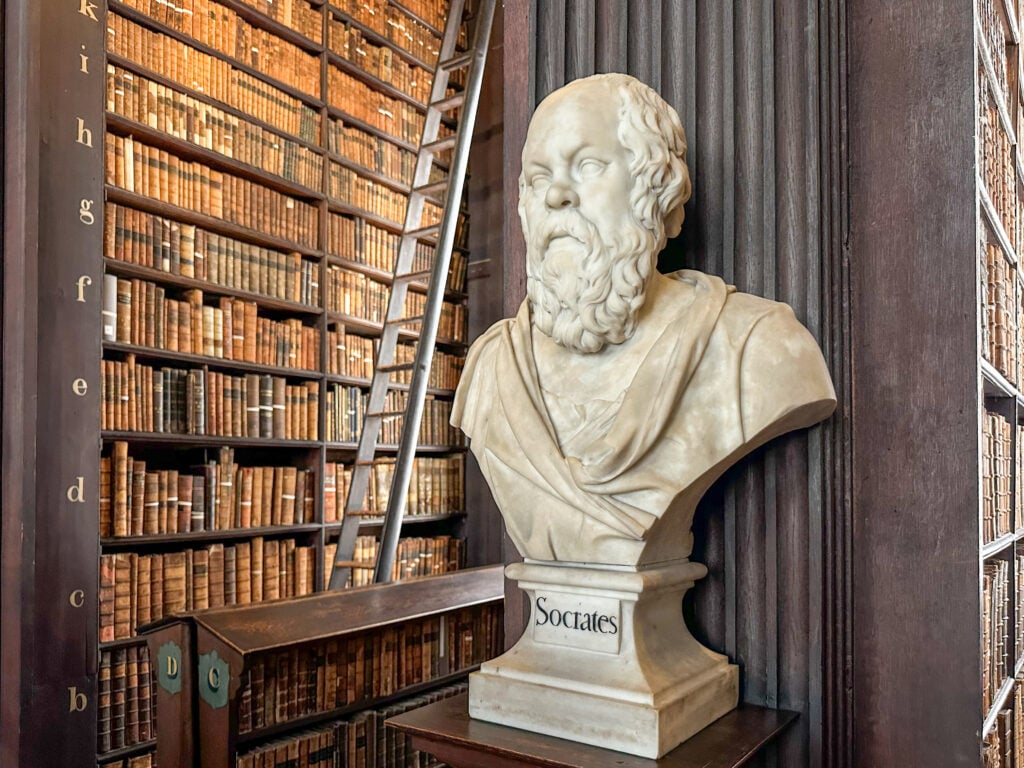
From the museum exhibit we then walked into the Long Room of the Old Library. Considered one of the most beautiful libraries in the world, the Long Room at Trinity College houses thousands of texts, several busts of notable thinkers, and the oldest harp in Ireland (which is also the icon of the Guiness beer).

When we visited in 2025, a large earth hung from the roof of the room. This is Gaia, an artwork by Luke Jerram, and will be in place until September 2026.
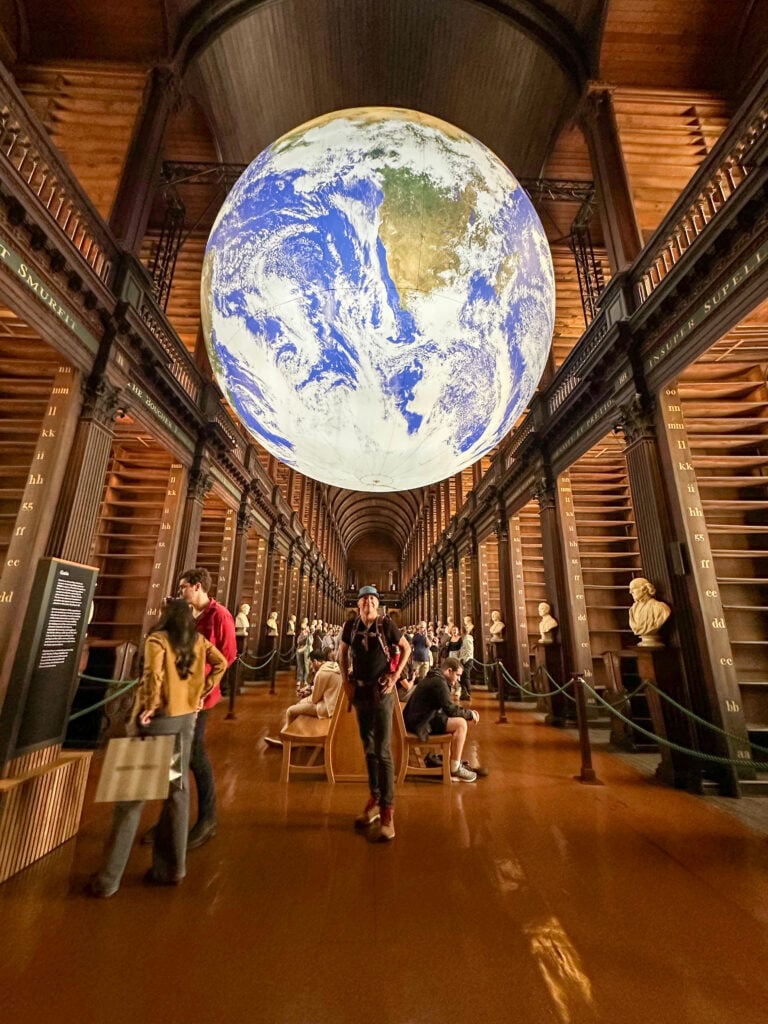
Another unique aspect of our visit is that it coincided with the Decant, the removal of the books from the Old Library one-by-one for preservation during the library’s redevelopment project. The shelves of the Long Room haven’t been seen empty in hundreds of years, so we were grateful to be visiting during this event in the library’s history!
The Red Pavilion Digitial Expositions
Leaving the Long Room, there’s one more experience left in store for Book of Kells visitors in the Red Pavilion. It’s the large red shipping container in the middle of the New Square.
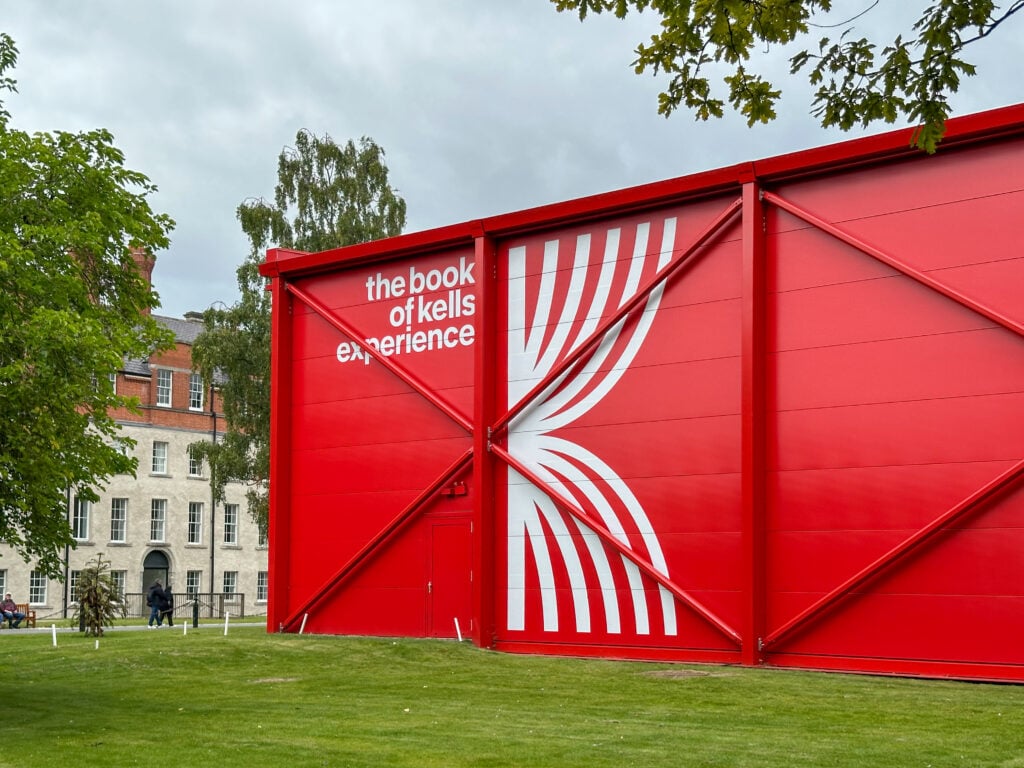
Inside are three separate immersive digital audio-visual experiences, one celebrating the stories behind some of the notable books in the Old Library collection, one about the Book of Kells itself, and one about the Decant.

Why the Book of Kells Is Worth Visiting
If you’re on the fence about visiting, here’s why I think the Book of Kells experience is absolutely worth it — especially if you love travel that connects you to place and story.
It’s a window into Irish history and culture.
You can read about Irish monasteries or see photos of Celtic art online, but standing in front of the Book of Kells feels different. It’s like being transported back over a thousand years — to a world where faith, art, and scholarship were intertwined. I love how the exhibit doesn’t just display the book; it tells the story of the monks who made it, the materials they used, and the Ireland they lived in. It’s one of those rare museum moments where history stops feeling distant.
It connects you to Ireland’s literary legacy.
Ireland is a nation of storytellers, and the Book of Kells is kind of where that all began. Seeing it reminds you that this island’s relationship with words and imagination goes back centuries — long before Joyce or Yeats or Sally Rooney. For me, it felt symbolic: this single artifact bridging Ireland’s ancient love of manuscripts with its modern literary identity. It makes sense that Dublin is a UNESCO City of Literature; that tradition started right here.
There’s something for everyone.
I think that even people who don’t usually love museums enjoy this experience because it’s so well-curated. The audiovisual exhibits are interactive and colorful, the manuscript itself is jaw-droppingly intricate, and then you get the Long Room — which is practically a movie set for book lovers. Whether you’re a visual learner, a history buff, or just someone who appreciates beautiful spaces, there’s a part of the visit that will stick with you.
It’s ideal for a rainy day.
Let’s be real — rain is part of Dublin’s charm. And this is one of the best things to do on a rainy day in Dublin: warm, peaceful, and entirely indoors. I spent nearly an hour wandering the exhibit while the rain fell outside on the cobblestones. It felt cozy and slow in the best possible way — a perfect Dublin afternoon.
It’s perfect for art, history, and architecture lovers.
The artistry here is mind-blowing. The fine detail of the manuscript, the craftsmanship of the Old Library, the way the room smells faintly of old wood and paper — it’s sensory and emotional. Anyone who loves cathedrals, museums, or even old bookshops will be in heaven.
You get access to the Long Room.
And this is the clincher. The Long Room alone is reason enough to buy a ticket. It’s one of the most beautiful libraries in the world — arched ceilings, marble busts of philosophers and writers, and rows of ancient books fading from gold to deep brown. You can’t visit it any other way; the Book of Kells ticket is your key in.
In short: even if you’re not usually a “museum person,” the Book of Kells experience has so many layers — visual, intellectual, emotional — that it’s almost impossible not to feel moved by it.
When the Book of Kells Might Not Be for You
As much as I love it, I also think it’s fair to say the Book of Kells isn’t for everyone — and that’s okay. Here are some things to keep in mind about the experience.
You only get a minute with the actual Book of Kells.
Seeing the Book of Kells itself is a hi-and-bye experience, with about a minute to circle the Book of Kells in its glass case while shuffling in a line of other visitors. If you envision standing alone in the dark room with the mystical text unfolded before you, taking in every letter and detail, this experience is definitely not that.
Some people find museums boring.
The exhibit is calm, quiet, and academic. If you’re traveling with little kids or anyone who prefers hands-on, fast-moving activities, it might feel slow.
Not everyone is interested in history, art, or architecture.
The entire experience is built around those three things. If none of them grab you, the meaning behind it might not land.
And not everyone likes books — full stop.
No judgment, but this one’s probably not your thing if you don’t like books at least a little bit. It’s a place for people who get chills from the smell of old paper or love the weight of history in a physical space.
The Book of Kells Experience is NOT free.
Tickets can feel pricey compared to Dublin’s fantastic free museums like the National Gallery or the National Museum of Ireland. If you’re counting every euro, you’ll get plenty of cultural value elsewhere.
You need at least 1.5 to 2 hours for the Book of Kells Experience.
If you only have a few hours in Dublin, you might prefer wandering through Temple Bar, walking across the Ha’penny Bridge, or grabbing a pint at a pub. The Book of Kells is best enjoyed when you can take it slow and really absorb it.
Tips for visiting the Book of Kells Experience
- Go early. Even with timed tickets, it can get crowded. The first entry of the day (around opening time) is your best chance for a quieter visit and better photos in the Long Room.
- Book ahead. Tickets often sell out, especially in summer and on weekends. Reserve online through Trinity College’s official site.
- Bring earbuds. There’s a free audioguide you can access from your phone. I find it much better than reading every sign, and it adds fascinating details about the book’s meaning and design.
- Visit nearby. Pair your visit with stops at the National Gallery, Merrion Square Park, or Bewley’s Café on Grafton Street.
- Combine with other rainy-day plans. The entire experience is indoors, making it one of the best things to do on a rainy day in Dublin.
- Check for closures. Occasionally the Long Room is closed for preservation work or special events — confirm before you book.
- Use the restroom beforehand. Facilities are limited inside the exhibit, so stop at the café or nearby shops first. There’s one in the gift shop in the Red Pavilion!
My Verdict: Is The Book of Kells Experience WORTH IT?
The Book of Kells Experience is one of those rare attractions that lives up to its reputation. In my opinion, it is absolutely WORTH IT! It’s educational, beautifully curated, and genuinely moving — a quiet reminder of Ireland’s long relationship with creativity, faith, and storytelling.
I absolutely recommend including the Book of Kells Experience in your Dublin plans, especially if you love art, history, or architecture. Plan to go early, bring your earbuds for the audioguide, and take a moment to stand still in the Long Room before you leave. The atmosphere there feels almost sacred, like stepping into the heart of Ireland’s literary soul.
More Ireland Guides
- START HERE– The Ultimate Ireland Travel Guide
- The Perfect Day in Dublin Itinerary
- Best Things to Do in Dublin on a Rainy Day
- Is the Book of Kells Experience REALLY Worth It?
- What to Pack for a Trip to Ireland for Women
- Best Foods to Try in Ireland
- Is Kilkenny, Ireland Worth Visiting?
- Is the Rock of Cashel Worth Visiting?
- How to Drive the Ring of Kerry in Just One Day