
The Cute + Casual Woman’s Packing List for a Trip to Ireland
I use affiliate links on this page to share my recommendations with you, which means when you click, I get a small percentage of the purchase at no extra cost to you. This allows us to keep this page running. You can read more about how we handle your data in our privacy policy and affiliate disclosure here.
Last Updated on December 4, 2025 by Sarah Puckett
Packing for Ireland can be surprisingly tricky. The weather changes constantly — sunny one minute, misty the next, and somehow raining and bright at the same time. Locals joke that you can experience all four seasons in a single day, and after spending weeks road-tripping across Ireland myself, I can confirm it’s true.
The good news? Once you understand Ireland’s weather patterns and learn how to layer, packing becomes much easier. Here’s exactly what to pack and wear for a trip to Ireland, no matter what month you’re visiting.
The Secret: Layers and Waterproof Everything
If you remember nothing else from this post, remember this: Ireland is damp. Even when it’s not raining, the air holds moisture, and wind can cut straight through you. The goal is to stay warm and dry without overpacking.
My go-to formula is three layers:
- Base layer – lightweight, moisture-wicking shirt (merino wool or synthetic).
- Insulating layer – fleece, sweater, or puffy jacket.
- Outer shell – fully waterproof rain jacket (not just “water-resistant”).
Bring a small packable umbrella if you like, but rely on your jacket first — coastal winds can turn umbrellas into mangled art in seconds.
And yes, pack rain pants. They’re one of the most underrated items for Ireland. Even if you only wear them a few times, you’ll be grateful when you’re hiking along the Cliffs of Moher, exploring Giant’s Causeway, or walking to dinner in a downpour. Look for lightweight, breathable styles that slip easily over jeans or leggings.

My Daily Ireland Outfits
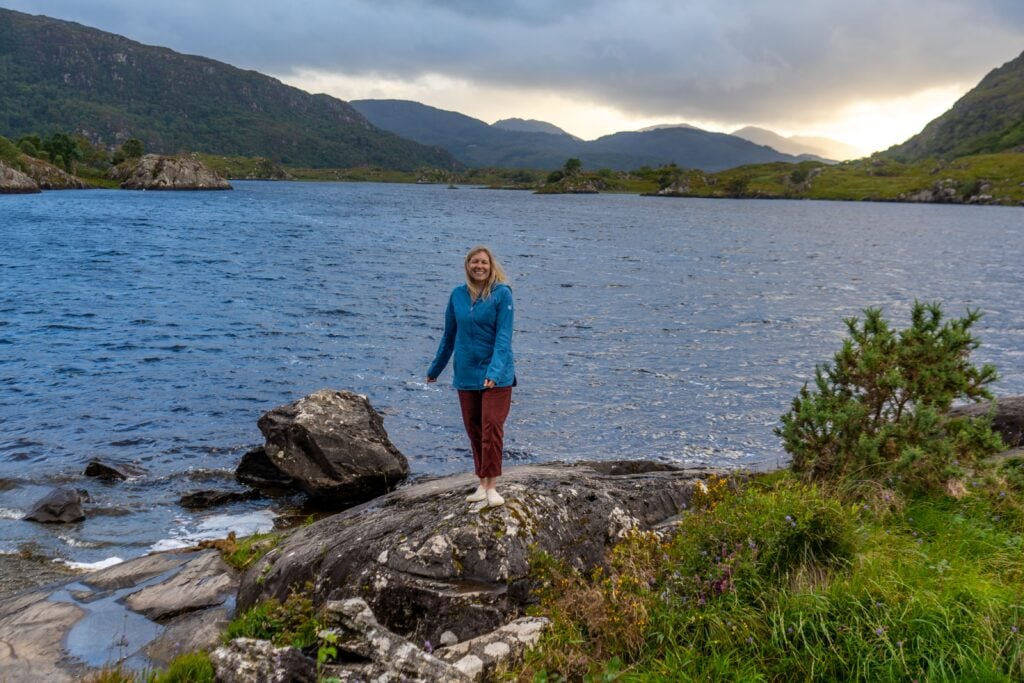
Here’s what I wore virtually every day in Ireland.
- LIYOHON Mock Neck Tee – I have this in eight colors and wear them literally all the time
- Black flare pants – another item I have multiples of, and these Free Country Trail 2 Town flare pants are my favorites.
- Jeans – Express has been my favorite jeans brand since I was in middle school, and I also love Old Navy jeans. Some things never change.
- Rain jacket – I brought my blue KUHL rain jacket.
- Wool scarf – I got mine from a shop in Fes, Morocco.
- Blundstone boots – my daily shoes for most activities in Ireland.
- Hiking boots – I wore my go-to Columbia Newton Ridge boots.

What to Pack and Wear in Ireland for Women
Tops
- Long-sleeve base layers or thermal shirts (for cooler months).
- Casual sweaters, cardigans, or fleece pullovers.
- A warm, midweight puffy or insulated jacket — even in summer evenings.
- Waterproof outer shell with a hood — non-negotiable.
Bottoms
- Jeans or travel pants (quick-dry fabrics are best).
- Leggings or thermal tights for layering.
- Rain pants — lightweight and packable; wear them over your regular pants when it’s wet or windy. This is the biggest thing I regret not having with us on our trip!
- Avoid denim on hiking days if rain is likely — it gets heavy and cold fast.
Footwear
- Waterproof hiking boots or trail shoes — essential if you plan to explore cliffs, castles, or national parks.
- Comfortable sneakers for city days.
- Optional: packable rain boots if you’ll be walking through farm paths or rural areas.
Accessories
- Lightweight hat or beanie (even in summer).
- Scarf — useful for wind, warmth, or adding a pop of color in photos.
- Gloves for late fall through early spring.
- Sunglasses — yes, you’ll need them between the rain showers.
Essentials to Pack for Ireland
- Daypack: Small waterproof or water-resistant bag for daily outings.
- Travel adapter: Ireland uses Type G plugs (same as the UK, 230 V).
- Reusable water bottle: Tap water is clean and safe to drink everywhere.
- Portable charger: Between navigation, photos, and Spotify road-trip playlists, your phone will drain fast.
- Quick-dry travel towel: Great for rain, hikes, or coastal adventures.
- Travel insurance: Weather disruptions and flight delays are common — this is a must.
What to Wear in Ireland By Season and Weather
Spring (March–May): Cool and unpredictable; temps range from 40–55°F (4–13°C). Bring light layers and a warm jacket.
Summer (June–August): Highs around 60–70°F (15–21°C). Long daylight hours, frequent showers. You’ll still want a rain jacket, rain pants, and closed-toe shoes.
Autumn (September–November): My favorite time to visit. Crowds thin out, landscapes glow green-gold, and temps hover in the 50s °F (10–14°C). Pack cozy sweaters and a waterproof shell.
Winter (December–February): Mild but damp. Lows rarely drop below freezing, but the wind and drizzle make it feel colder. Bring thermals, waterproof boots, rain pants, and a good umbrella.
My Ireland Packing List (Carry-On Friendly)
- 2 pairs of jeans or travel pants
- 1–2 pairs of leggings or thermals
- 1 pair of rain pants
- 4–5 tops for layering
- 1 light fleece or sweater
- 1 insulated jacket or puffer
- 1 waterproof rain jacket
- 1 pair waterproof hiking boots
- 1 pair sneakers
- 1 scarf, 1 beanie, gloves
- Small umbrella
- 4–5 pairs of merino wool socks
- Travel adapter, power bank, toiletries, and personal items
Everything fits easily in a carry-on suitcase and a small daypack — no need to haul a giant bag through cobblestone streets.
Electronics & Photography Gear for Ireland
Ireland is a dream for photographers — dramatic cliffs, moody skies, colorful towns, and light that changes by the minute. To capture it all (and keep your gear safe from the weather), here’s what I recommend packing:
Cameras & Accessories
- Sony Mirrorless Camera (like the a7III or a7IV): Compact, reliable, and perfect for low light. Ireland’s overcast days and golden-hour rainbows are best captured with a full-frame camera.
- Lenses: A wide-angle (16–35mm) for landscapes, a 24–70mm for everyday use, and a lightweight zoom or prime if you want portraits or details.
- Extra batteries and SD cards: You’ll shoot a lot — castles, cliffs, pubs, and every single sheep. Power outlets use Type G plugs, so bring a few extras.
Drone
- DJI Mini 5 Pro: Perfect for sweeping coastal shots and aerial views of ruins. Drones are legal in Ireland for personal use, but you must follow EU drone laws. Stay under 120m altitude, keep line of sight, and avoid flying over crowds or national monuments.
- ND filters & spare propellers: Coastal light shifts quickly, and the wind can be strong.
- Dry bag or hard case: Protect your drone from rain — Ireland’s weather can change in seconds.
360 & Action Cameras
- Insta360 X3 or GoPro: Great for fast-moving content, cliffs, and rainy days when you don’t want to risk your main camera.
- Mounts: A chest mount or selfie stick is great for hiking, biking, or windy cliff walks.
Other Essentials
- Portable charger/power bank: Keep your phone and camera batteries topped up while driving or hiking.
- Multi-outlet travel adapter: Ireland uses UK-style Type G plugs (230V).
- Laptop or tablet: For backing up photos nightly (or editing on rainy evenings).
- Weather protection: A rain cover for your camera or a simple plastic sleeve — it’ll save your gear more than once.
- Tripod: To get photos without having to rely on strangers to get the shot
My Favorite Camera Gear Setup for Ireland
For my Ireland road trip, I carried my Sony a7III, a DJI Mini drone, and an Insta360 X3 for quick action clips. Between the dramatic coastline of Kerry and the moody ruins in the Burren, I was constantly swapping between all three — and I was grateful every time I’d packed an extra SD card and microfiber towel.
Final Thoughts on What to Pack for Ireland for Women
Ireland’s weather has a mind of its own, but that’s part of the adventure. If you pack smart — waterproof layers, comfy shoes, and rain pants you’ll be thankful for later — you’ll be ready for anything the Emerald Isle throws at you. And when the rain clears and the sun hits those green hills, you’ll forget all about the drizzle.
More Ireland Guides
- START HERE– The Ultimate Ireland Travel Guide
- The Perfect Day in Dublin Itinerary
- Best Things to Do in Dublin on a Rainy Day
- Is the Book of Kells Experience REALLY Worth It?
- What to Pack for a Trip to Ireland for Women
- Best Foods to Try in Ireland
- Is Kilkenny, Ireland Worth Visiting?
- Is the Rock of Cashel Worth Visiting?
- How to Drive the Ring of Kerry in Just One Day


